Skip to content
Buen Fin deals: packs with delivery included

Xunáan Kaab · Ancestral treasure

Melipona Honey Benefits

Natural and bee-pollen Melipona honey, according to scientific research

Melipona beecheii · Yucatán Peninsula, Mexico

scientific references
11
phenolic compounds and flavonoids
19
protein in the pollen
36.9%
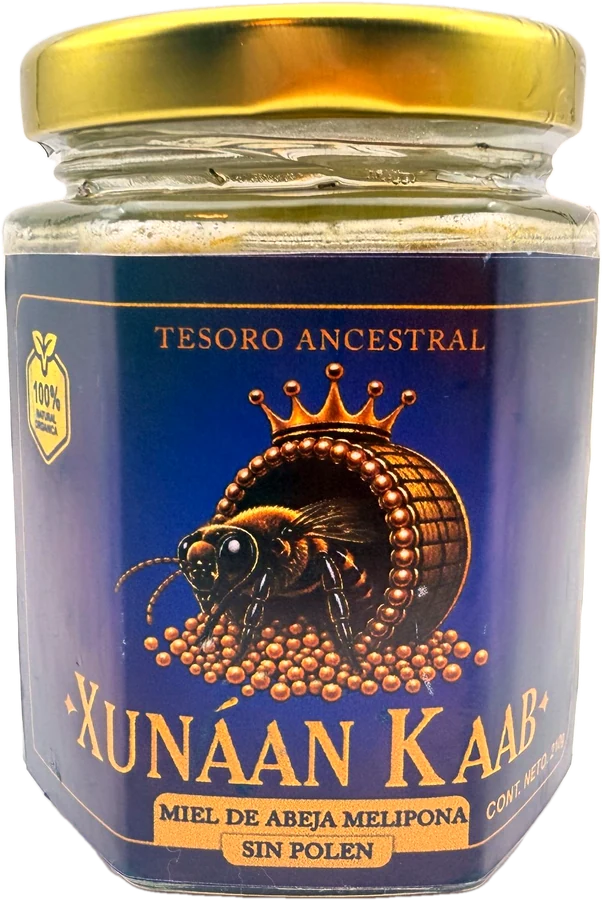
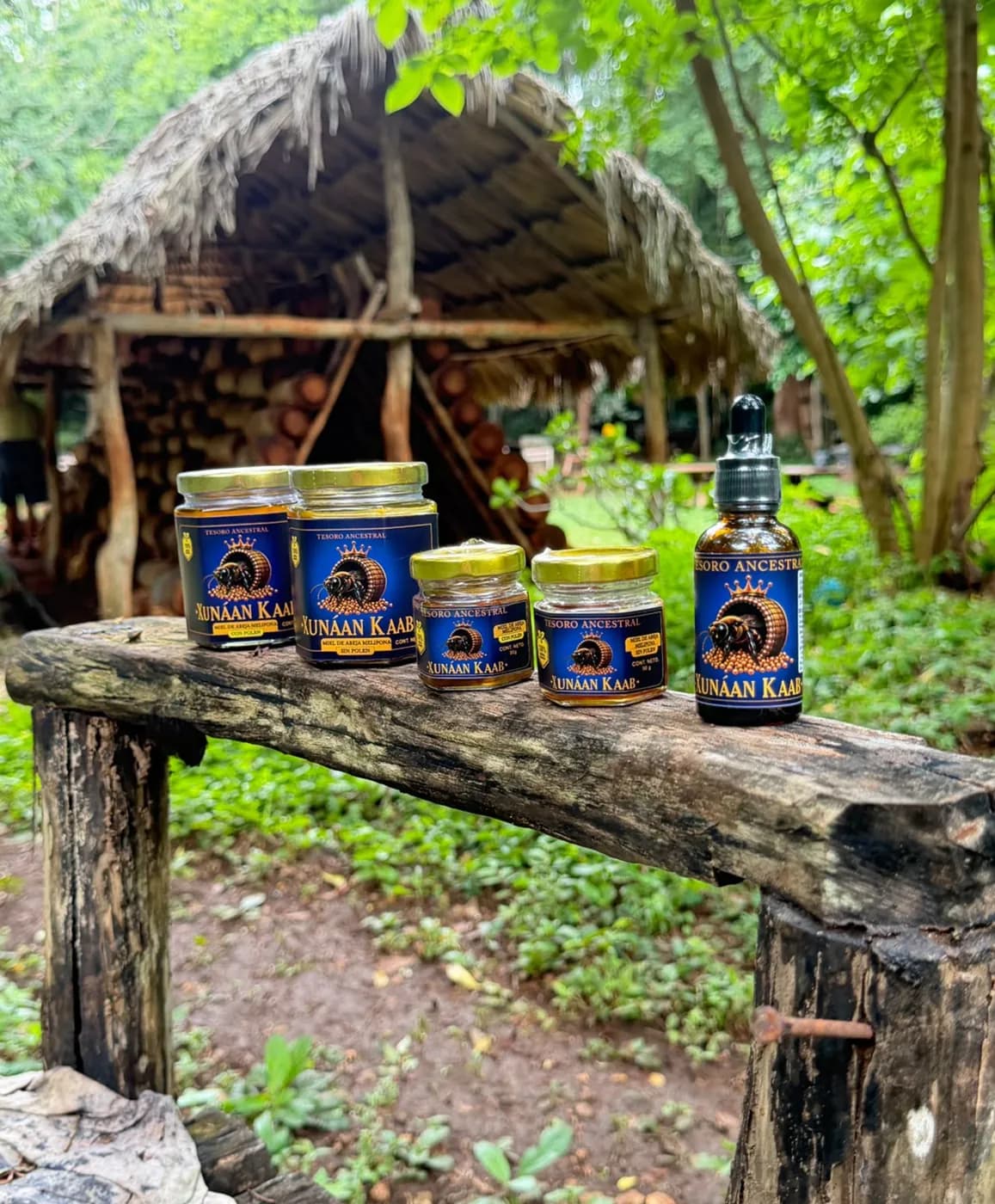
Xunáan Kaab natural and bee-pollen Melipona honey at a meliponary in Yucatán
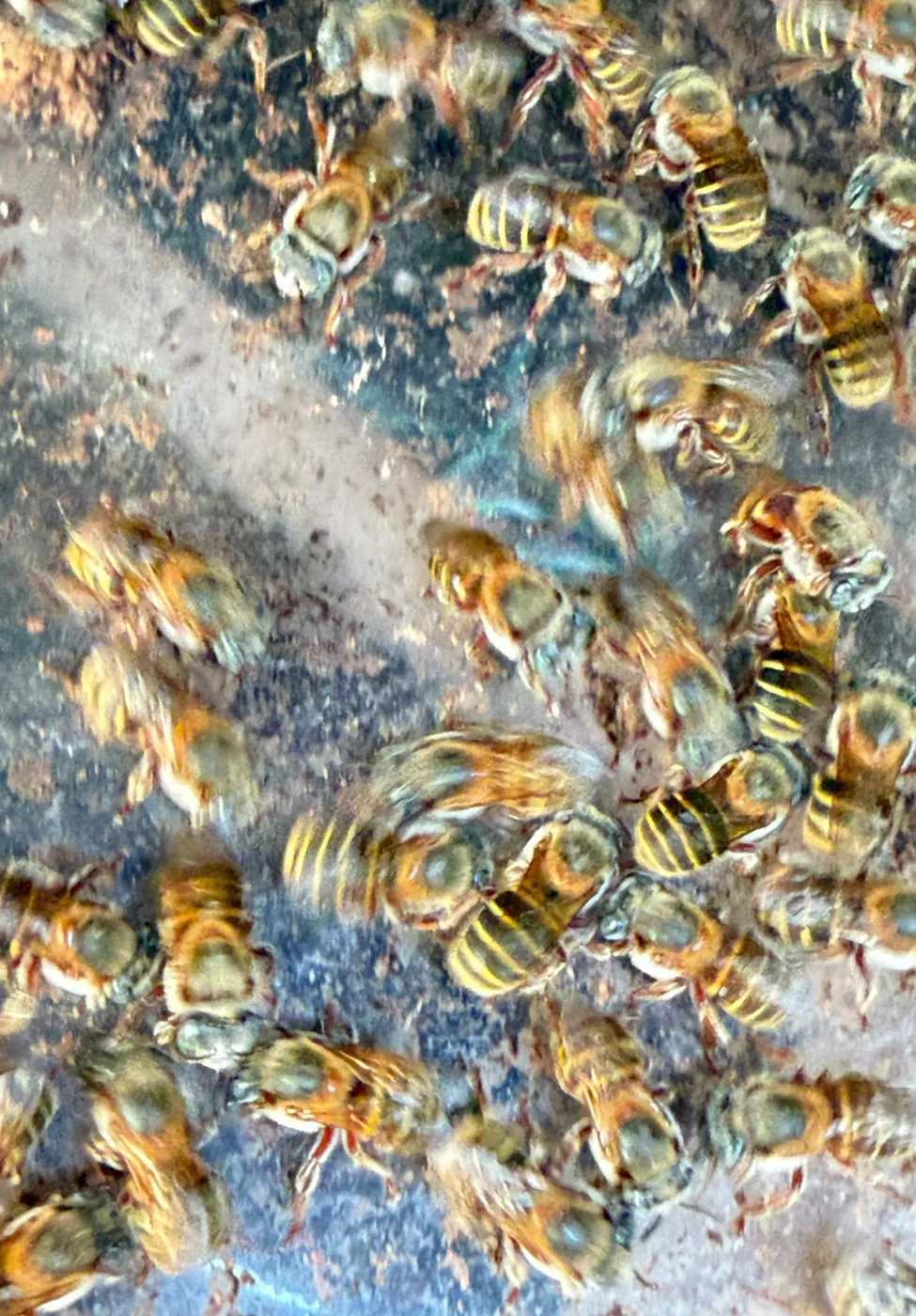
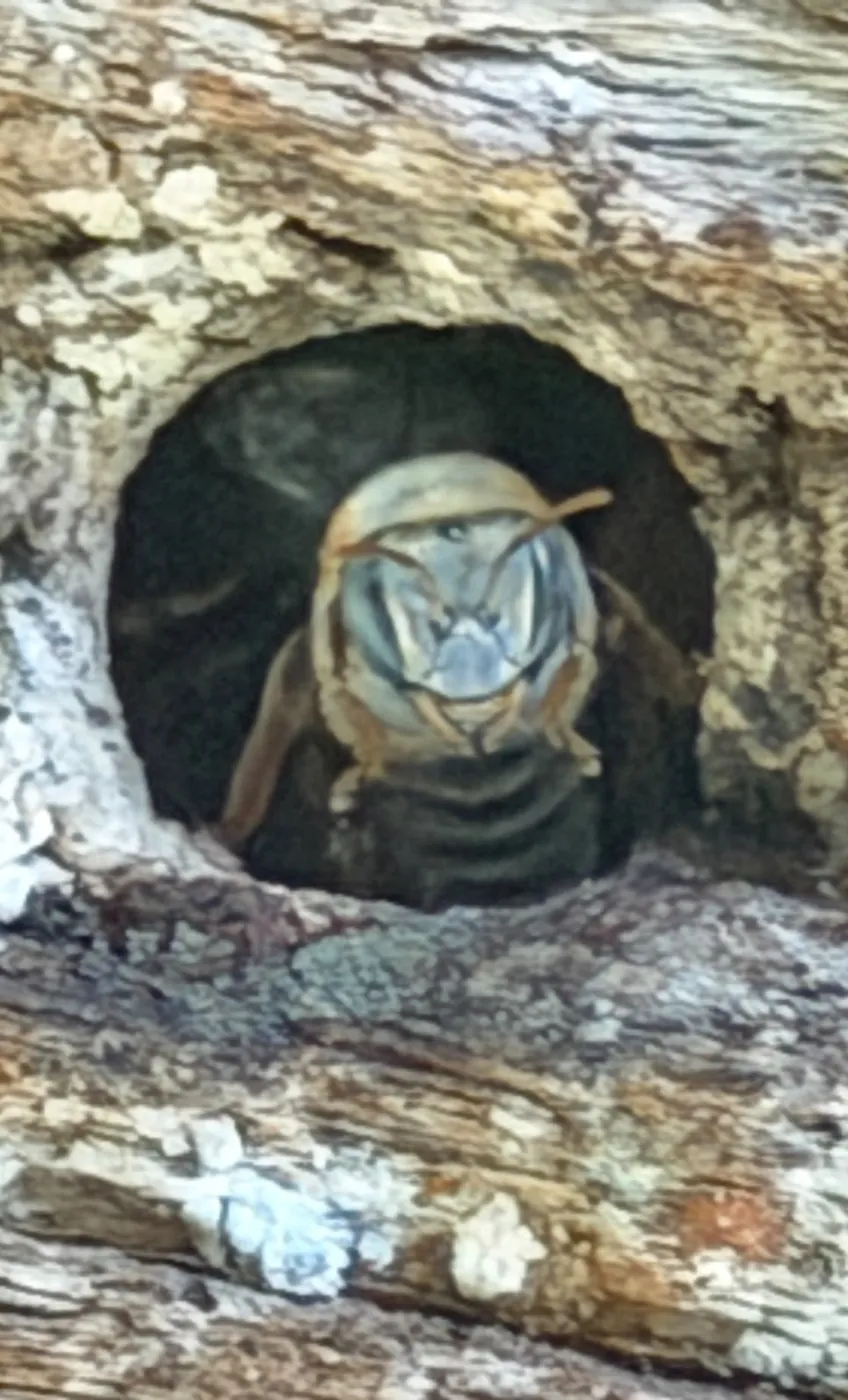
Melipona bee at the entrance of its jobón, the hollow log where the colony livesMelipona beecheii

Unlike regular (Apis) honey

The Xunáan Kab (Melipona beecheii) is a native stingless bee kept by the Maya for centuries.

  • Moister and more acidic

    That's why it's thinner than regular honey, with a slightly citrusy taste.

  • Matures in cerumen pots

    Wax mixed with plant resins, which add plant compounds to the honey.

  • More bioactive compounds

    More phenols, flavonoids, vitamin C and protein than the Apis honey it was compared with.

Sources: Alvarez-Suarez et al., LWT 87, 2018 [1] · Sommeijer, Bee World 80(2), 1999 [7]

Our honey

Xunáan Kaab, pure and premium

  • 100% natural, from the native stingless bee of Yucatán
  • Raw: unpasteurized and unblended, just as it comes from the jobón (log hive)
  • No additives or preservatives, and no added sugar
  • Small, hand-crafted harvest that respects the rhythm of the hive
  • No refrigeration needed: in a mild climate it keeps for years
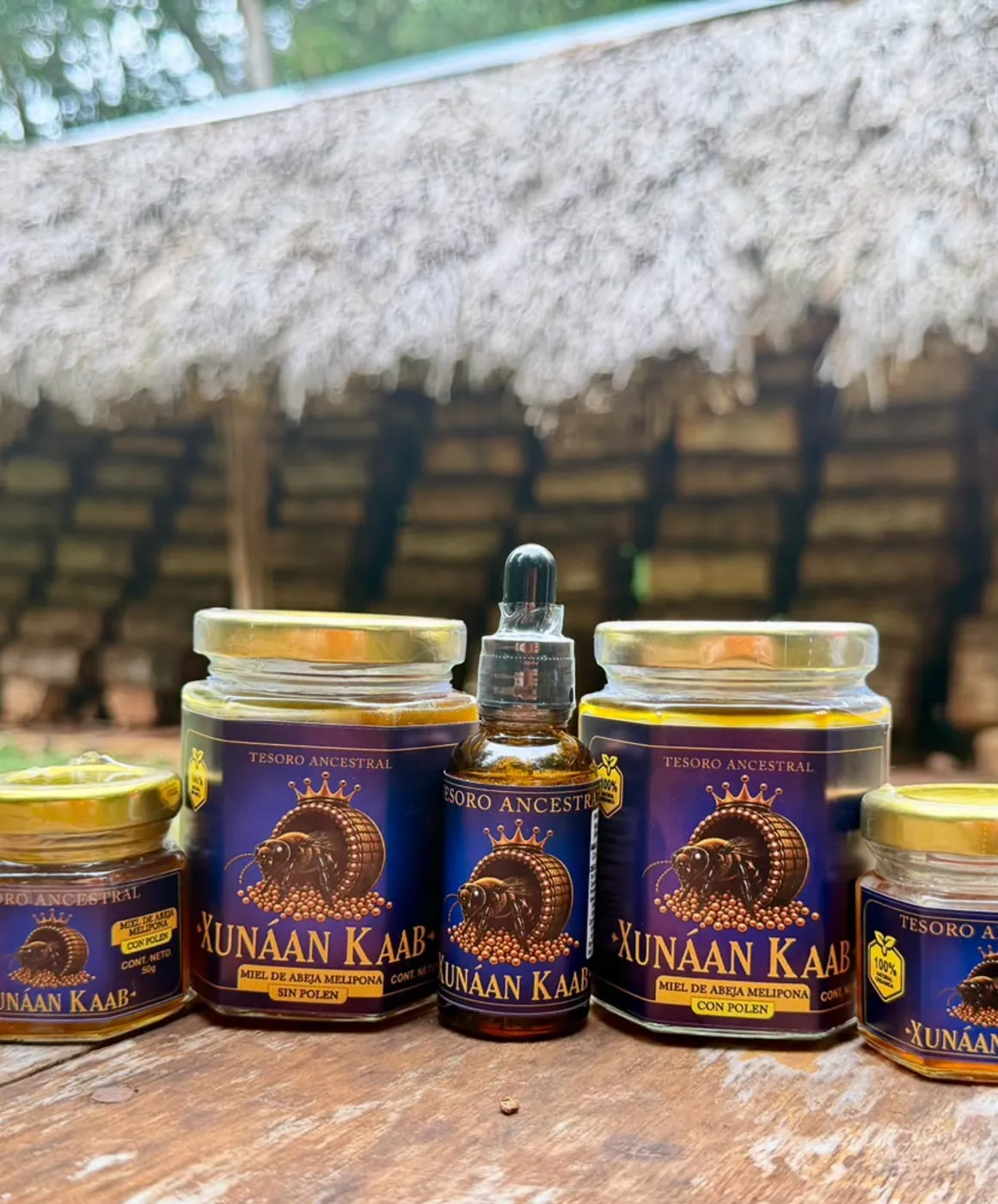
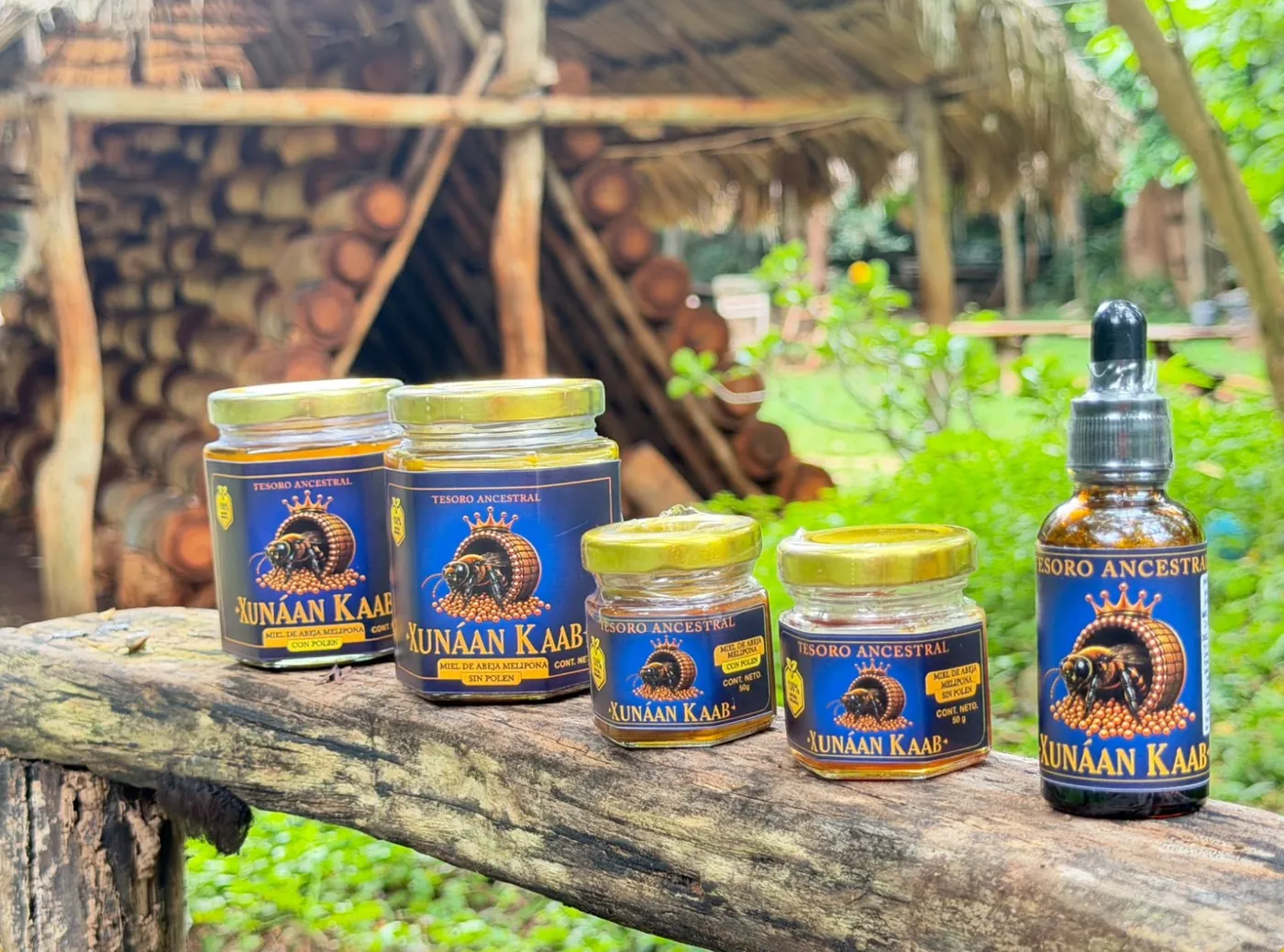
Xunáan Kaab Melipona honey jars and dropper on a log in front of a meliponary

How to read the evidence

The benefits below come from laboratory studies published in scientific journals. Each section lists its source.

Lab studies

In vitro tests: the honey, the pollen or their extracts against bacteria and free radicals, and their chemical composition.

Tradition

Uses in Maya medicine passed down through generations.

Lab results are promising, but clinical trials in people are still scarce. Our honey is a food, not a medicine.

01

Natural Melipona honey

Antioxidants, antibacterial activity in the lab and active proteins

Xunáan Kaab natural Melipona honey sizes at a meliponary
Lab studies

Antioxidant power

19

phenolic compounds and flavonoids identified in M. beecheii honey, versus 16 in Apis honey

Compared with the Apis honey in the same study, Melipona honey had:

  • Higher total antioxidant capacity
  • More phenols and flavonoids
  • More carotenoids and vitamin C
  • More free amino acids and protein

Source: Alvarez-Suarez et al., LWT 87, 2018 [1]

Lab studies

Antibacterial activity in the lab

52

bacterial strains from clinical samples: Melipona honey showed the strongest activity — even compared with Manuka honey

  • Disrupts biofilms. The protective layers bacteria build to shield themselves
  • Damages their structure. Seen under the electron microscope in S. aureus and P. aeruginosa
  • Yucatán honey too. Phenols and proteins from Maní honey inhibited E. coli and S. aureus

Sources: Morroni et al., Frontiers in Microbiology 9:1378, 2018 [2] · Ramón-Sierra et al., Food Sci. Biotechnol., 2020 [3]

Tradition

Uses in Maya medicine

Traditional practices shared as cultural heritage — not health claims. Our honey is a food.

  • Eyes

    A well-known traditional remedy. We don't recommend it: our honey is a food, it isn't sterile, and the U.S. FDA has warned against honey eye drops.

  • Skin

    Traditionally applied to small scrapes, bumps and burns.

  • Throat

    A spoonful on its own or with lime — a home custom for the throat.

  • Digestion

    A home custom for the stomach, according to the region's folk knowledge.

Source: Universidad de San Carlos de Guatemala, Informe INF-2007-018, 2007 [11]

02

Melipona honey with bee pollen

Everything in the honey, plus protein, essential amino acids and unsaturated fats

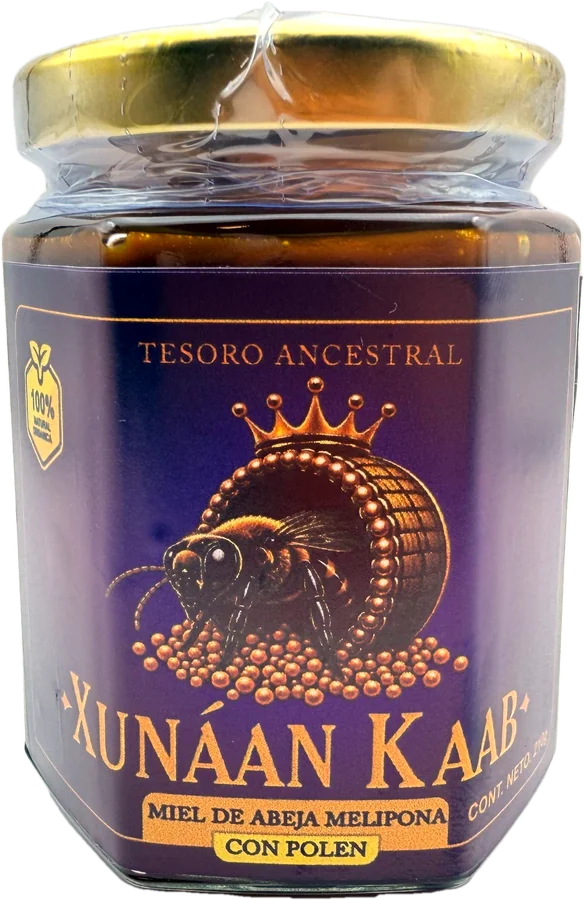
Jar of Xunáan Kaab Melipona honey with bee pollen on a log

Rich in essential amino acids

Leucine, methionine, threonine and valine, among others: the ones the body can't make and must get from food.

Lab studies

What else pollen showed in the lab

  • Antibacterial activity

    Active against 5 bacteria of medical importance; Listeria and Pseudomonas were the most sensitive.

  • Antioxidant

    Its activity was higher than reported in other pollen studies.

  • Unsaturated fats

    Linoleic and linolenic acids, omega-type unsaturated fats.

  • In another Melipona

    All essential amino acids, fiber, carotenoids and flavonoids.

Sources: Calderón-Martínez et al., Chemistry & Biodiversity 21(12), 2024 [9] · Rebelo et al., J. Sci. Food Agric., 2021 (M. seminigra) [10]

Natural or with pollen

Feature
Natural Melipona Honey 180 ml
Natural
Melipona Honey with Bee Pollen 180 ml
With pollen
AntioxidantsFrom the honeyFrom the honey and the pollen
Antibacterial activity (lab)From the honeyFrom the honey and the pollen
Protein and amino acidsSmall amountsExtra from the pollen
Unsaturated fatsNoYes, omega-type
Taste and textureLight and citrusyDarker and creamier
Best forTea, drizzling and skin careEveryday nutrition and energy

Summary of the studies above · The amount of pollen varies with each harvest

Responsible use

  • Not a medicine

    It complements, but does not replace, any medical treatment.

  • Under 1 year

    Do not give any honey to babies under 12 months (risk of infant botulism).

  • Diabetes

    It's still sugar: talk to your doctor before eating it.

  • Allergies

    Pollen can cause reactions in people with allergies.

  • Eyes

    Not for use in the eyes.

  • Storage

    No refrigeration needed: in a mild climate it keeps for years.

Frequently asked questions

About the honey

What is Melipona honey?

The honey of the Xunáan Kab, a native stingless bee of Yucatán that the Maya have kept for centuries.

Why is it so runny?

It naturally has more moisture and acidity than regular honey. It isn't watered down.

Why does it cost more?

Each hive makes only 1 to 2 liters a year, and it's harvested by hand.

Natural or with pollen?

The natural one is great for tea and drizzling. The pollen version adds protein, amino acids and unsaturated fats.

Use and care

How do I store it?

It doesn't need refrigeration. Tightly closed, in a mild place away from sunlight, it keeps for years.

Can children eat it?

Yes, from age 1. Babies under 12 months should not be given any honey.

Is it OK if I have diabetes?

Its glucose content is very similar to regular honey. Talk to your doctor before eating it.

Source: Castillo-Martínez et al., Veterinaria México OA 9, 2022 [6]

Can it be used in the eyes?

No. Our honey is a food and isn't sterile — please don't put it, or any honey, in your eyes. The U.S. FDA has warned against honey eye drops.

References

Honey

  1. 1Alvarez-Suarez et al. (2018). Apis mellifera vs Melipona beecheii Cuban polifloral honeys. LWT 87: 272-279.
  2. 2Morroni et al. (2018). Antimicrobial activities of four honeys from three countries. Front. Microbiol. 9: 1378.
  3. 3Ramón-Sierra et al. (2020). Phenolic and protein extracts from M. beecheii honey vs E. coli and S. aureus. Food Sci. Biotechnol.
  4. 4Ramón-Sierra et al. (2022). Antimicrobial and antioxidant activity of proteins from M. beecheii honey. Food Chem. X 13: 100177.
  5. 5Non-glycosylated honey proteins of M. beecheii against E. coli O157:H7. J. Appl. Microbiol. 130(6), 2021.
  6. 6Castillo-Martínez et al. (2022). Sugars and °Brix in honey from Apis mellifera, M. beecheii and commercial honey in Mexico. Veterinaria México OA 9.
  7. 7Sommeijer (1999). Beekeeping with stingless bees: a new type of hive. Bee World 80(2): 70-79.

Pollen and tradition

  1. 8Yam-Puc et al. (2025). Physicochemical and nutritional composition of pot-pollen of M. beecheii in Yucatan. J. Food Res. 14(2).
  2. 9Calderón-Martínez et al. (2024). Antioxidant and antibacterial properties of M. beecheii pot-pollen extracts. Chem. Biodivers. 21(12).
  3. 10Rebelo et al. (2021). Nutritional composition and bioactive compounds of Melipona seminigra pot-pollen. J. Sci. Food Agric.
  4. 11Universidad de San Carlos de Guatemala (2007). Estudio nutricional de las mieles de meliponinos. Informe INF-2007-018.

Our honey is a food and is not intended to diagnose, treat, cure or prevent any disease. Not for use in the eyes. Do not give honey to infants under 12 months.

Xunáan Kaab

Melipona honey from Yucatán: Maya tradition backed by science